F R A G M E N T 0 0 2
The collector’s son did not inherit an object.
He inherited a rupture.
The surviving file does not describe a theft in any ordinary sense.
Insurance documentation closed the matter as a loss.
A government representative later visited the family residence.
He was formal. Measured. Uninvited. Authoritative.
The conclusion, he explained, was final.
The son did not accept that.
He did not begin with suspicion.
He began with grief.
He had watched his father diminish for decades after the manuscript’s removal — not through scandal or madness, but through withdrawal. Something essential slowly drained away.
When his father died, the unanswered event of 1953 remained the central fracture in the family’s history.
What troubled him was not the disappearance alone —
it was the condition in which it had occurred.
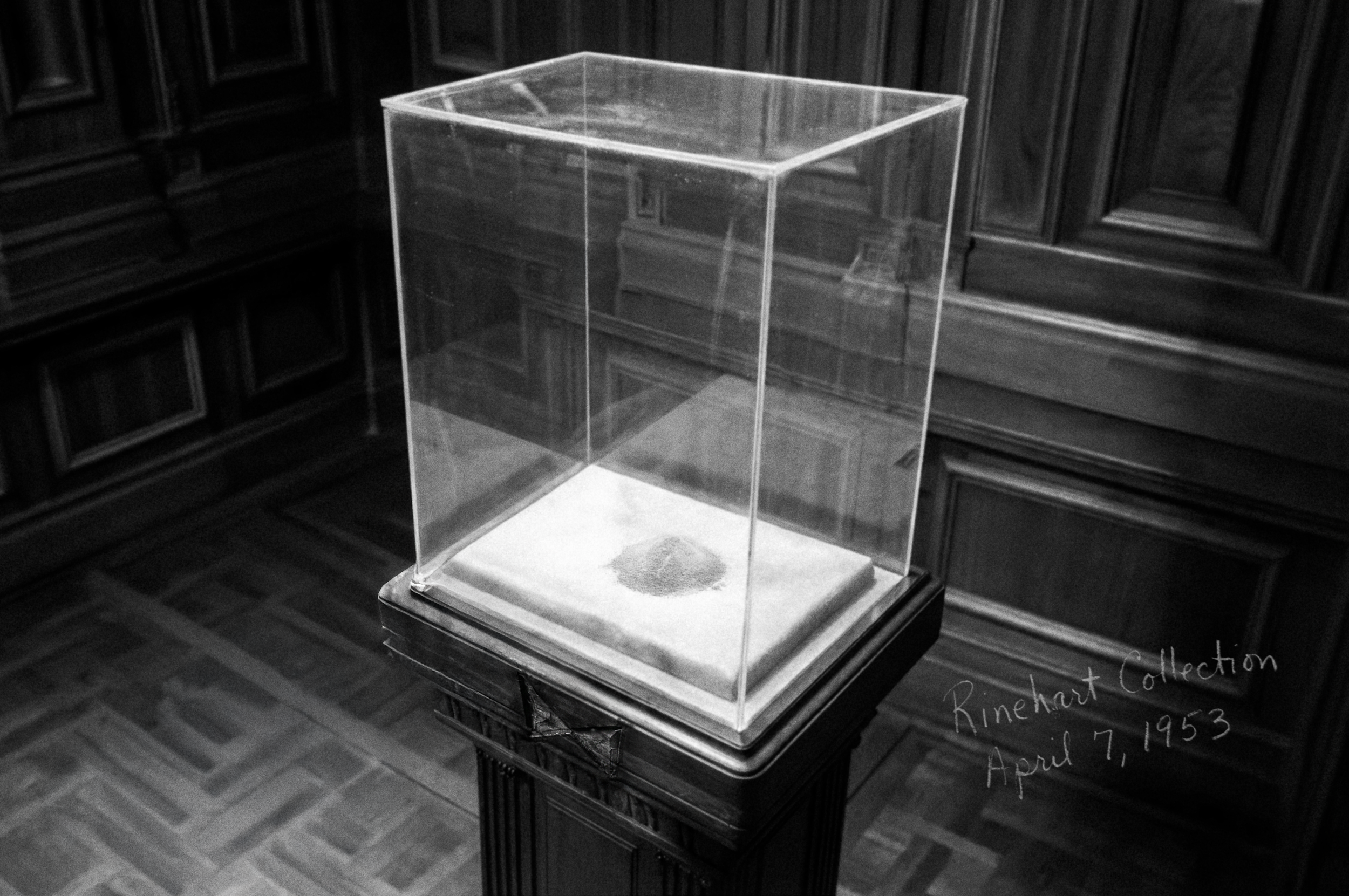
The display case had not been breached.
Where the manuscript had rested, a fine layer of gold particulate remained — not scattered, but placed.
Beneath it, impressed into the wood of the stand, was a marking no member of the household recognized.
It had not been carved nor burned in any conventional manner.
It appeared embedded.
A symbol, seemingly ancient in origin.
Unidentifiable across history.
The surviving file indicates that both details were to be omitted from any family-facing summary.
The son took note.
Unlike his father, he was not invested in status.
He was invested in meaning.
In tracing references to the manuscript’s prior custodianship, he encountered a recurring divergence.
In formal archives, the text was described as philosophical - contemplative, moral, instructive. Outside them, in letters, marginalia, and private correspondences, it was described differently.
Some regarded it not as commentary, but as mechanism.
Accounts described episodes of illumination without visible source.
Witnesses referenced openings that were not architectural, yet spatially coherent.
Those in proximity of these events were profoundly and irreversibly altered
These descriptions clustered around moments of upheaval.
The Crusades.
Wars of Empirical Expansion
Two World Wars
The Atomic Age.
Each period marked by acceleration — a new order forming, power structures rearranging.
And violence.
He began to suspect that what had occurred in 1953 was not theft.
It was intervention.
Deliberate.
If so, the question shifted:
Who intervened — and why?
He shared preliminary findings with another collector — a man his father had trusted.
Within days, the son's employment was terminated without explanation.
A long-standing personal relationship ended abruptly.
His vehicle was disabled — a single line beneath the hood severed cleanly and left visible.
The message was precise.
He withdrew from public investigation.
But one conclusion remained.
The manuscript had surfaced in 1946 during a period of global realignment.
It had been removed in 1953 during a consolidation of institutional power.
The atomic threshold had altered more than weaponry.
It had altered attention.
If the pattern held, the manuscript did not appear randomly.
It appeared at inflection points.
And inflection points do not diminish with time.
There are indicators that the conditions which historically accompany its emergence are no longer confined to the past.
The difference now is scale.
Fragment 003 follows.